
BEATSURFING
BLOG
ONHA - Le playback, c'est pas possible
12:35 min • Interview by Fabrice Blin • Recorded at the backstage of Ancienne Belgique
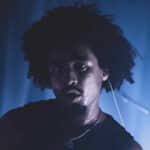
"We're almost completely autonomous with the music we perform live. I'm so much more able to live my songs, as if I were reliving the moment I lay down my voice in the mic at the studio."
ONHA
When hip-hop meets live instrumentation, something electric happens.
ONHA — rapper, singer, and proud product of two cultures — has been quietly building one of Belgium’s most exciting live shows out of Liège. Half Belgian, half Ivorian, and, as he puts it, “100% baby culture,” ONHA doesn’t just rap over beats. He and his band — Roko on Ableton Push and flute, Timo on drums, and Dumb switching between keys, bass, and guitar — reconstruct every track from the ground up for the stage. The result: a set that’s roughly 80% live while staying true to the electronic and trap DNA of the original productions.
In this episode of Live Check, ONHA takes us through the full journey — from watching Fatman Scoop’s “Be Faithful” video as a kid and thinking “I need to do this”, to rethinking what a rap concert can be when you strip away the backing tracks and commit to playing everything live. He talks gear, growing pains (turns out, adding a drummer to electronic music is harder than it sounds), and why he believes live performance is more important than ever in the age of AI-generated music.
He also shares where it’s all heading next: real-time interaction with the audience, motion capture visuals, and integrating BEATSURFING into his live setup as a way to create melodies on the fly, mid-show.
Hit play, or read the full transcript below.
FULL TRANSCRIPT
Can you introduce yourself?
Hello everyone, this is Ona Owenacha, rapper originally from Liège. Now I’m moving to Brussels. Not 50% Belgian, 50% Ivorian — but 100% baby culture. I make rap where I like to mix genres, mix styles. And yeah, I also sing.
What first sparked your passion for hip-hop?
I saw a music video — the one by Fatman Scoop and Faith Evans, “Be Faithful,” in 3D with the big heads. When I saw that video, I was like wow. It gave me this impulse towards hip-hop. I was like yo, I really want to do this thing. And then there’s a French rapper called Disiz La Peste, who is actually mixed-race. He was the first rapper I listened to who talked about being mixed-race. He talked about how hard it was to find your place in society as a mixed-race person. And he’s the one who made me realize — okay, I’m a guy who comes from a very working-class neighborhood in Liège, where it’s a struggle, where it’s tough, it’s complicated. But still, I stand for positive values and I try to break free from this kind of social determinism. And I said, oh wait, I can rap too. Disiz La Peste made it click for me and I started rapping. So it’s thanks to Monsieur Sérigne that I rap.
How did you get into production?
When I started rapping, I was also producing on the side. I had Fruity Loops, I had FL. And then, meeting Roko — my current beatmaker — he introduced me to Ableton.
How did the live show come together? You’ve never been a rapper-DJ act…
When I started doing rap on stage, I was never really a rapper-DJ type of guy. All my beatmakers have always played a musical instrument. When we started performing live in 2019, from the very beginning we wanted to add live instruments to the mix. At first, it was with Dumb, who’s a multi-instrumentalist. On stage, we had guitar, piano, bass, and a hi-hat. There was this trap track we loved — it was the last track in the set — and we’d use the hi-hat. People were like: whoa, they’ve got a real hi-hat! The guy was smashing it like crazy. And there was just something there. On the other side, there’s Roko who plays the transverse flute and uses the Ableton Push. And from there, we just said: man, come on, we want to push the live aspect as far as possible.
How did you evolve from that early setup?
We started with that formula, but we were still pretty dependent on backing tracks, and that was a problem. For the new show — for “On n’a pas d’amis volants,” the project — we said, why not add a drummer to the lineup. There was this amazing drummer from Liège named Timo who joined us. What’s cool is that at first, we didn’t want a drummer at all. These are trap tracks, electronic tracks — we didn’t want to water down the electronic side with acoustic stuff. But when we teamed up with Timo, we realized there’s tons of gear to reproduce electronic sounds — triggers, drum pads, all of that. We took the leap. And now we’ve got a live set that’s maybe about 80% live while still making electronic music. I’ve always dreamed of doing this.
What does being fully live mean to you personally?
Now that we’re almost completely autonomous with the music we perform live, I enjoy it so much more. I’m so much more grounded in my songs. I’m able to live them. It’s like every time I perform my music live, I’m reliving the moment when I lay down my voice in the mic at the studio. It’s powerful, for real. Because when you see rappers doing playback on stage — how can you truly live your song when you’re doing playback? It’s not possible. I’ve always been hugely moved by other music genres. Jazz, reggae — they’re so much more suited to fully live performance. I’ve always had this dual perspective: I love raw rap concerts, just a DJ and a mic, going hard. But I also love it when artists come with full brass sections, full orchestras. For me, with my music, going live is almost an obligation.
With AI making it so easy to generate music, what’s your take on that?
Even AI is taking up a lot of space. It’s a very good thing. But on the other hand, we need to double down to show that when there are no humans behind it, the music gets a bit lost. I think live music is going to become more and more important. I feel like the impact of AI is astronomical — it’s exponential compared to what we experienced with the Internet. I used Suno just for fun. Damn! I can make a song about my mom’s carrots in one minute? AI is something else. But you have to know how to use it. The best way to be less skeptical or less afraid is to understand how it works. Pascal — my beatmaker — was the first one to tell me about Suno. Even though his job is to create sounds and make beats. But the guy is telling me about an AI that could replace his job. There’s a completely different relationship with it.
Tell us about the band and the gear you use on stage.
First there’s Roko, who’s on the Ableton Push, the Toolbox, and the synthesizer. He does the 3D visuals and makes all the music. Then there’s Timo, the drummer. He uses his acoustic drum kit with these incredible cymbals made from a certain type of sand — he told me this crazy story about their manufacturing process with water. And then there’s Dumb, multi-instrumentalist — pianist, bassist, guitarist. He plays his Expressive E, which is more of a studio instrument, but we took the gamble of using it live because we love the super expressive side of it. He also has a bass and guitar with massive
distortion pedals all over them. Those are my three guys on stage. Software-wise, we like Omnisphere, Random, Random Metal. For effects, we use a lot of Cheat Codes — you can multiply effects together and create a really unique sound. And what’s cool is that all the instruments we use on stage, we also
use in the studio.
What are the technical challenges of going fully live?
Once we added a drummer, it got less easy. You have to strip all the drums from a track, export each drum track and send it to his Roland electronic kit. And sometimes when he plays — since it’s not metronomically perfect — it doesn’t work. So we try the acoustic version, and that means all these rearrangements we have to redo. People often forget that you can’t just go live on your own. You also need the sound engineer who works with you. Before, the instruments were all managed from Roko’s software — he uses Reason. But he’d send the signal with like 15 instruments in it. In terms of mixing, that doesn’t work. So now it’s about learning to output track by track, multi-track. Everything changes. We had a lot of latency issues too. Big shout out to the Reason team, but let’s just say Tim sometimes has to make fire from rocks and sticks.
What’s the dream for the future of the live show?
What we’ve already done today is the maximum we can do given the technical constraints and the capacity of the venues we can fill. I also have to be aware of the constraints relative to my level of fame right now. But I want to start playing live instruments myself — that’s what I’m missing. With Pascal, we’ve talked a lot about integrating BEATSURFING on stage. I’d really like to integrate it because it’s a great alternative for someone like me who raps and sings at the same time — to just slide my finger on my iPad, make a solid melody, loop it, interact with the audience, stop, then start again. That’s the next step. Right now I’m already using a bit of Auto-Tune for interactions, but in the future I’d love to interact more. And if I can make the projections even more incredible — with Roko, we wanted to attach motion capture cameras to me and do a real-time thing where I move my hand and it’s instantly replicated in Blender. I’d love to do that.
Long live the live, long live composition, long live creativity. Even if things are tough right now, it’s important to keep your head up and make sure that the little flame we have inside us stays alive.
Want to know more about ONHA? Discover the artist now !
Stay tuned!
Get notified when we release a new article.
Subscribe to our newsletter.
 Login with Google